


 Tiếng Việt
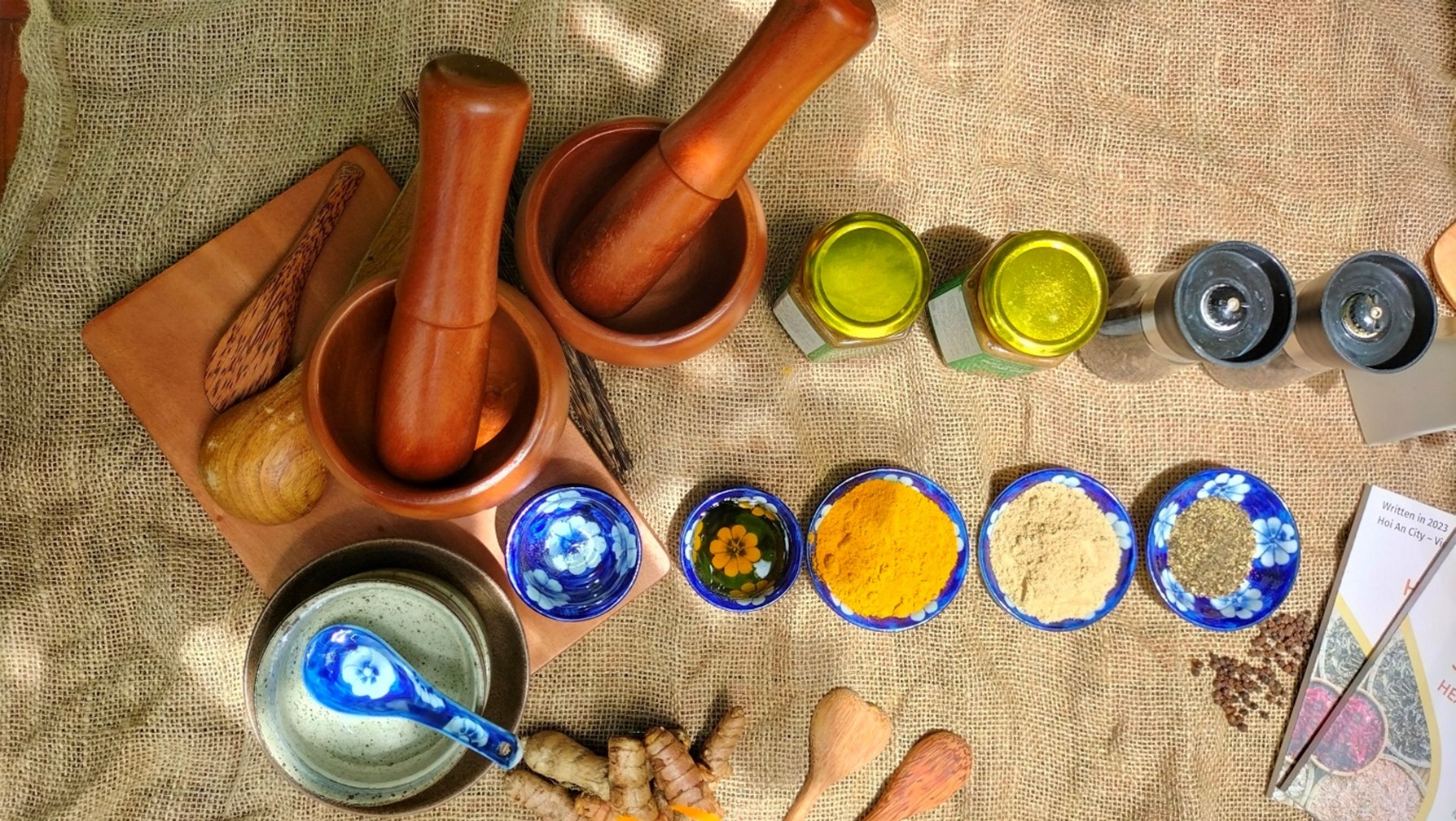
“Golden Physician”
Description
Turmeric is native to Indonesia and southern India, where it has been harvested for more than 5,000 years. It has served an important role in many traditional cultures throughout the East. It has been used throughout history as a condiment, healing remedy and textile dye.
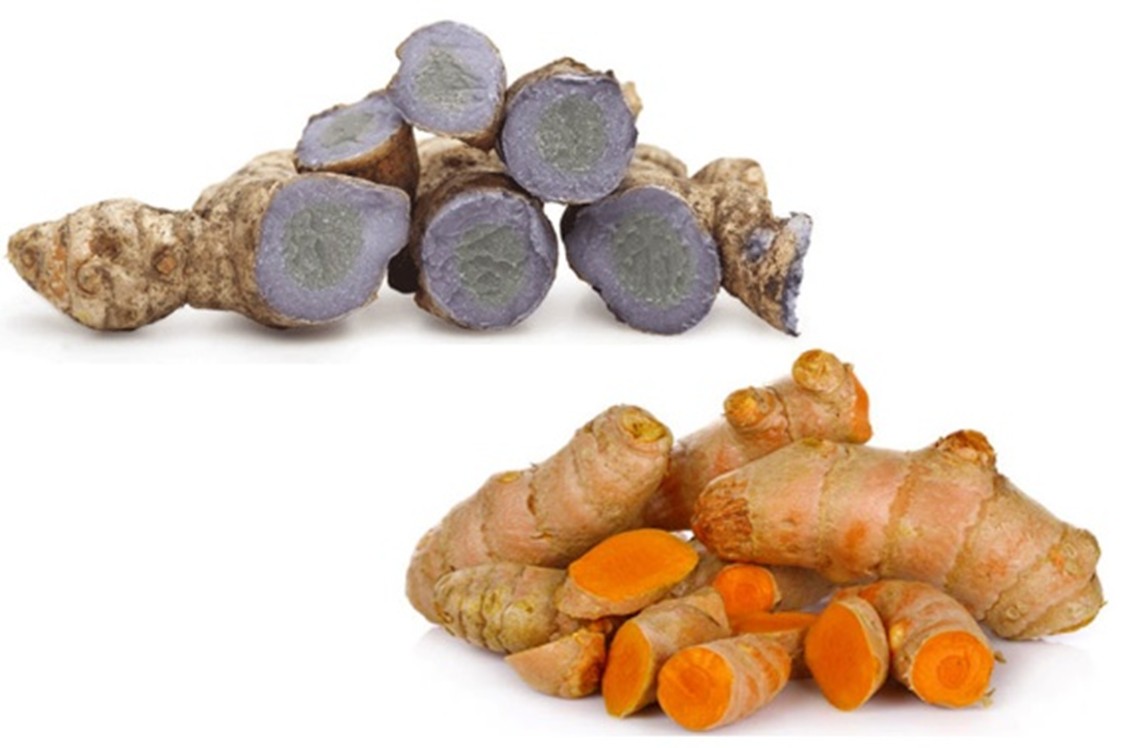 There are three main types of turmeric, namely yellow turmeric, black turmeric and white turmeric, of which yellow turmeric is more popular in the world than the other varieties. Yellow turmeric has yellow flesh, white turmeric has white flesh and back turmeric has dark purple green color and black veins or stripes. Black and white varieties are more bitter than the yellow one.
Enegertics
Turmeric is a herb with midly warm and dry energy, making it suitable for individuals with a cold and damp body constitution. Those with a warm/slightly hot constitution can also use it regularly.
Health benefits
The greatest benefit of turmeric is its anti-inflammatory and wound-healing properties. Turmeric can heal ulcers, reduce inflammation, prevent bleeding, and ward off infection. This has been proven through practice; in Vietnam, turmeric has long been a top remedy for gastric and colonic ulcers. Modern herbalists have successfully used turmeric to treat acute conditions like appendicitis, colitis, and other inflammatory ulcers.
Turmeric’s powerful anti-inflammatory and smart inflammatory modulation capabilities make it highly effective in treating arthritis, including osteoarthritis and rheumatoid arthritis.
Turmeric also supports cardiovascular health by reducing inflammation associated with heart disease, helps detoxify and purify the liver, and improves liver function by reducing inflamed or damaged liver cells.
Turmeric has antioxidant properties that help slow down the aging process, promote skin healing, and make the skin smoother and more radiant.
Furthermore, turmeric benefits people with diabetes by reducing inflammation associated with type 2 diabetes and mitigating insulin deficiency. Additionally, numerous studies have shown that turmeric helps prevent blood cells from developing into cancerous cells, making it valuable for cancer prevention.
Black turmeric has a more bitter taste than yellow turmeric, so it has stronger anti-inflammatory and liver-detoxifying properties, while yellow turmeric is richer in antioxidants and better for skin health.
(read more in “Alchemy of herbs”– Rosalee De La Forêt)
How to use
There are now many turmeric-based products on the market, such as turmeric powder, nano curcumin capsules, turmeric supplements, and turmeric extracts. However, herbalists note that turmeric contains hundreds or even thousands of active compounds that affect different parts of the body, contributing to its unique benefits. Therefore, it’s best to use fresh turmeric root or pure turmeric powder made from the root to fully leverage its remarkable properties.
There are two ways to increase turmeric’s absorption: First, add a small amount of black pepper powder (around 3% – 5%) as piperine from black pepper enhances turmeric absorption by 2,000%. Second, prepare turmeric with oil and heat, which helps release its components more effectively, making them easier for the body to absorb.
Turmeric is a herb that can be used regularly for disease prevention, liver detoxification, and digestive support. For preventive purposes, a daily dose of about 1 to 2 grams of turmeric powder is recommended. For treating specific ailments, a higher dose of 3 to 10 grams of turmeric powder per day is needed.
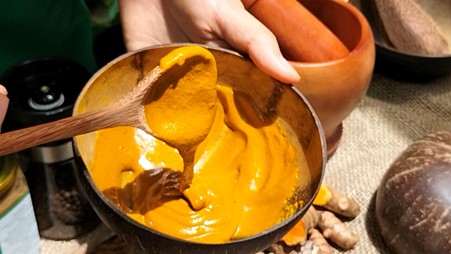
In my view, one easy and enjoyable way to use turmeric regularly is to combine turmeric powder with black pepper and honey into a paste, store it in a glass jar, and keep it refrigerated. When needed, simply take a small spoonful of this mixture and follow it with warm water. This method is easier to take and more flavorful than mixing turmeric directly into water, milk or other juices.
Tips
To see the benefits of using turmeric, it should be used continuously for 2 to 6 months when treating a specific condition. Additionally, daily use of a small amount of turmeric can improve overall health, support digestion, prevent infections, and strengthen the immune system.
For those with a weak immune system, frequent inflammatory issues, and chronic conditions such as chronic pharyngitis, sinusitis, gastric ulcers, osteoarthritis, or muscle pain, it is recommended to use a daily combination of turmeric and ginger at a ratio of 2 parts turmeric powder to 1 part ginger powder, with a small amount of black pepper powder (3% – 5%).
How to grow and process
Turmeric is a very easy plant to grow— you can plant it using the whole root or just a part of it. It thrives in sunny weather, and the time from planting to harvest is about six to seven months.
To grow turmeric, simply mix soil with compost, keep it moist by watering for three to five days, then place the root about 10 cm deep into the soil. Watering every other day is sufficient, as turmeric does not need too much water, so there’s no need to water it constantly.
When it’s time to harvest, clean the turmeric roots, then slice them into pieces about 0.5 cm thick (keeping the skin on is even better). Dry the slices under the sun or in a dryer. Store the dried turmeric in a bag or glass jar at room temperature — it can be preserved for a year or even longer.
Turmeric Products Made at An Farm Hoi An
Black turmeric powder mix with 5% black pepper
Yellow turmeric powder mix with 5% black pepper
Black turmeric infuse honey (black turmeric, 5% pepper and honey)
Yellow turmeric infuse honey (yellow turmeric, 5% pepper and honey)
Skin care powder (white turmeric, perilla and red bean)