


 Tiếng Việt
DMulberry – A gift for women’s health and beauty
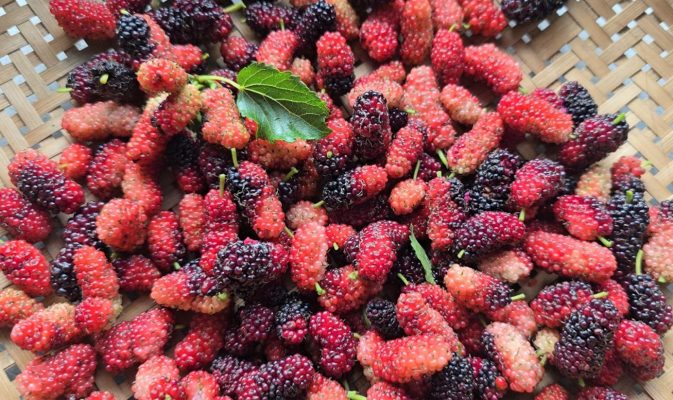
Description of Mulberry
Mulberry is a small deciduous tree belonging to the genus Morus, widely cultivated in many Asian countries, especially China, Japan, Korea, and Vietnam. The tree grows well in tropical and subtropical climates and has traditionally been cultivated for its leaves to feed silkworms, while its fruits and other parts are also valued in traditional herbal practices.
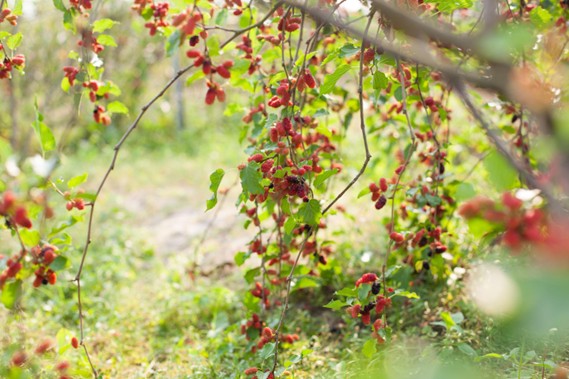
Mulberry trees have soft woody stems with many branches. Their leaves are heart-shaped or oval with lightly serrated edges. The fruits grow in clusters, starting green before turning red and deep purple-black when fully ripe. Mulberries have a naturally sweet and slightly tart flavor and are rich in anthocyanins and other beneficial nutrients.
Mulberry has a long history closely connected to sericulture and silk production in Asia for thousands of years. In ancient China, mulberry cultivation was considered an important part of silk civilization. Over time, mulberry became valued not only for silk farming but also as a nutritious food and traditional herbal ingredient due to its health-supporting properties.
Today, the fruits, leaves, roots, and bark of the mulberry tree are widely used in food, herbal teas, and natural wellness products.
In this article, I focus on the nutritional value of the fruits of the mulberry.
Enegertics of Mulberries
Mulberries are considered cooling to slightly cold in energetic properties, helping to gently clear heat and soothe the body. They are also regarded as moistening because they contain high amounts of water, natural sugars, and nutrients that help relieve dryness and internal heat, especially in relation to blood and body fluids. Therefore, mulberries are considered particularly suitable for people with hot and dry body constitutions.
Health benefits of Mulberries
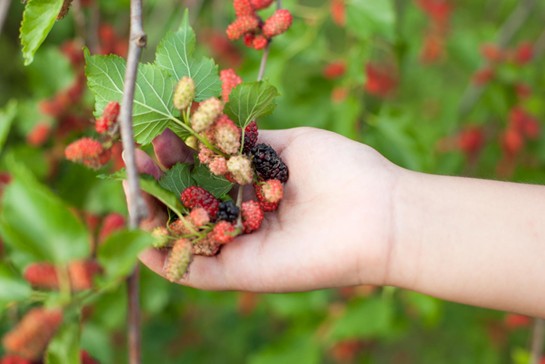
According to traditional Eastern medicine, mulberries (Sang Shen) are believed to nourish the blood, support yin energy, promote body fluids, support liver and kidney function, and help relieve dryness, internal heat, and weakness. Due to their cooling and moistening properties, mulberries are considered especially suitable for people with internal heat, dry throat, heat-related constipation, fluid deficiency, or weakness after fever or illness.
From a scientific perspective, mulberries, like other berries such as strawberries, blueberries, and hawthorn berries, are rich in anthocyanins, flavonoids, vitamin C, and many natural antioxidant compounds beneficial to health.
Their high vitamin C content helps support the immune system, protect against infections, improve skin health, and maintain youthful skin by supporting collagen synthesis.
Many scientific studies have shown that mulberries may help reduce oxidative stress, slow the aging process, and protect cells from free radical damage. These effects may contribute to healthier cells, longevity, and potential cancer-preventive benefits.
Thanks to their high polyphenol content, mulberries have also been studied for their potential cardiovascular benefits, including reducing LDL (“bad”) cholesterol, supporting blood circulation, and reducing inflammation. In addition, mulberries may help support weight management, reduce fat accumulation in the liver and blood, and benefit people with high blood pressure.
Some studies also suggest that mulberries may help support blood sugar control and improve glucose metabolism, making them potentially beneficial for people with diabetes or for supporting diabetes prevention.
Furthermore, the bioactive compounds found in mulberries have been associated with liver support, enhanced immune function, and reduced inflammatory responses in the body.
The antioxidant activity of mulberries is also believed to have potential neuroprotective effects and may support brain health.
Nutritionally, mulberries contain vitamin C, vitamin K, iron, potassium, dietary fiber, anthocyanins, and natural polyphenols.
Mulberries are relatively low in calories while being rich in beneficial plant compounds. Therefore, they are now considered a “functional food” — a nutrient-rich food with significant potential to support health when included as part of a balanced diet.
How to use Mulberries
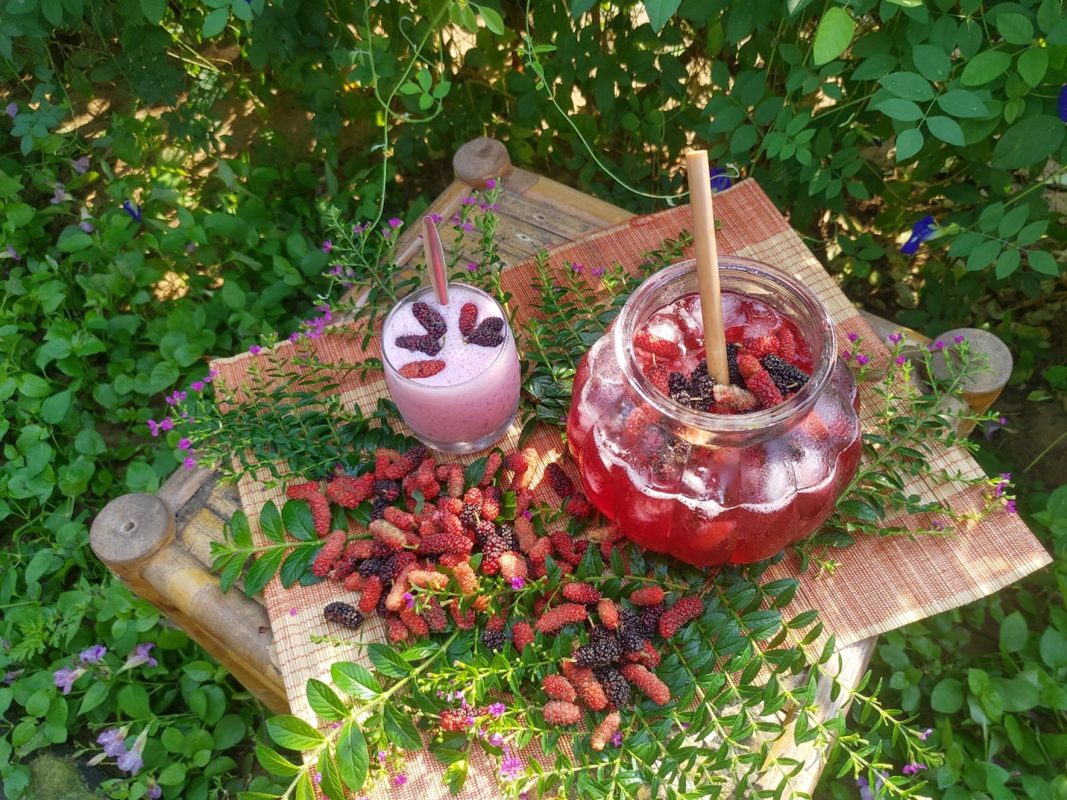
Mulberries can be used in many different ways in both culinary applications and natural wellness practices.
Fresh mulberries are commonly eaten directly as a nutrient-rich fruit high in vitamins and antioxidants. They have a naturally sweet and slightly tart flavor, making them suitable as a healthy snack or combined with yogurt, oatmeal, and salads.
Mulberries are also widely used for juices, smoothies, and syrups. Mulberry juice is a popular beverage that helps refresh the body and provide natural nutrients.
In addition, mulberries can be dried to make herbal tea, used in jams, desserts, or preserved with honey.
In many regions, mulberries are also fermented to produce vinegar, fruit wine, and traditional beverages.
To make fermented mulberry wine, place 2 kg of mulberries into a glass jar, then add 1.2 kg of sugar on top without mixing it into the fruit. The purpose of the sugar layer is to help protect the mulberries from unwanted bacteria and harmful microorganisms during fermentation. Close the lid tightly and store the jar in a dry place away from direct sunlight.
After about six months, the mulberries naturally ferment into a lightly alcoholic mulberry wine. The liquid can then be separated and stored in the refrigerator for long-term use. At this stage, the wine usually has a mild sweet-and-sour flavor with relatively low alcohol content. If fermented longer, up to one year, the alcohol content will gradually become higher.
Tips
Mulberries are traditionally considered nourishing for yin energy, supportive for blood health, and cooling to the body, making them especially beneficial for women, particularly during the perimenopausal stage.
If mulberries are not available, other berries and fruits such as strawberries, blueberries, hawthorn berries, or roselle (Hibiscus sabdariffa) may also be good alternatives, as they contain similar antioxidant compounds and beneficial nutrients.
How to Grow and ProcessMulberries
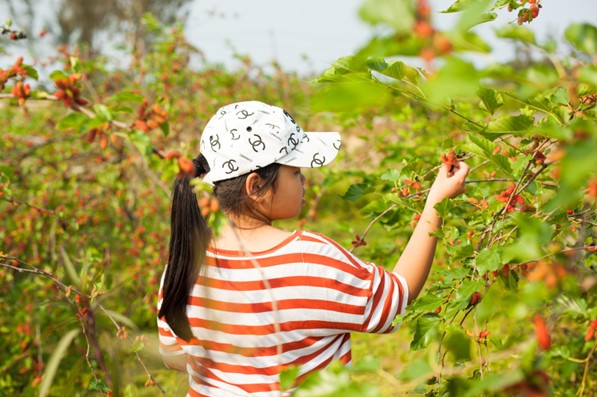
Mulberry trees are commonly propagated through stem cuttings because they root easily and grow quickly. Healthy, disease-free branches about 20–30 cm long are selected and planted in loose, well-drained soil rich in organic matter. The soil should be kept moderately moist during the early stages to encourage root development.
Mulberry trees grow well in warm, sunny climates and require plenty of sunlight for healthy growth. They should be planted in a well-ventilated area and watered regularly while avoiding waterlogging. Compost or organic fertilizer can be added periodically to support vigorous growth and abundant fruit production.
After several months of care, the trees begin to grow strongly and may start producing fruit depending on the variety and climate conditions. The fruits are ready for harvest when they change from red to deep purple or black.
After harvesting, the fruits can be eaten fresh, stored in the freezer for 6 months to 1 year, or dried at approximately 60°C for 24–28 hours and then preserved in airtight bags for up to 6 months.
Mulberries can also be processed into jam, mulberry syrup, or fermented mulberry wine using the method described above.
Products containing Mulberries from our farm
- Mulberries Jam
- Mulberries syrup
- Dry Mulberries
- Mulberries wine